
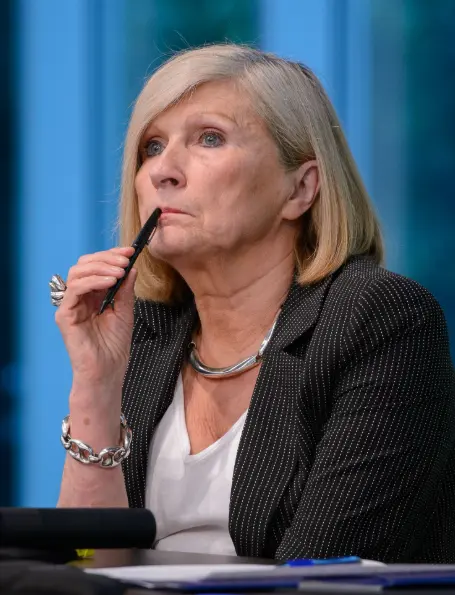
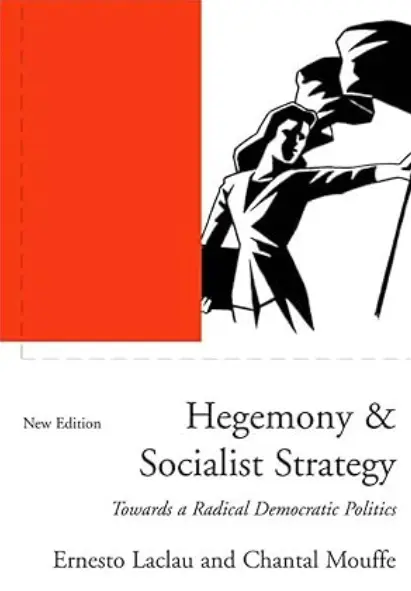
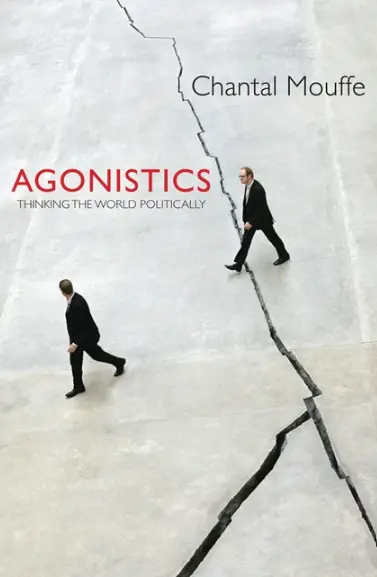
Editorial Note: [Editorial Note: Chantal Mouffe is an influential post-Marxist theorist of modern times. This Belgian political theorist currently teaches at the University of Westminster. She is particularly known for formulating her political theory by drawing upon Gramscian thought and post-structuralist concepts. She has long worked on reorganizing left politics through the lens of 'radical democracy.' The book Hegemony and Socialist Strategy, co-authored with Ernesto Laclau, has been widely discussed and broadly read. In addition, her major works include: Gramsci and Marxist Theory (ed. 1979), Dimensions of Radical Democracy (ed. 1992), The Return of the Political (1993), The Democratic Paradox (2000), On the Political (2005), Agonistics: Thinking the World Politically (2013), and Podemos: In the Name of the People (2016), For a Left Populism (2018), etc. Mouffe's interview was published at the end of the book Agonistics: Thinking the World Politically (Verso, 2013) (pp. 129–147). The interview was conducted by Elke Wagner in 2007 in London. It was first published in a 2007 collection: [Und jetzt?: Politik, Protest und Propaganda [And Now?: Politics, Protest and Propaganda], (ed.) Heinrich Geiselberger, Berlin: Suhrkamp, 2007].]
Question: Question: The book Hegemony and Socialist Strategy, written by you and Ernesto Laclau, has been translated into numerous languages and has significantly influenced theories surrounding New Social Movements. In this work, you sought to reconstruct Marxist theory to engage with contemporary discourses on the nature of 'the political'. Could you please share something about the genesis and foundational concepts of this book? In particular, what was the role of the concept of hegemony here?
Mouffe: When writing Hegemony and Socialist Strategy, we had two main objectives. One was political, and the other was theoretical. The political objective was to reshape the socialist project so that it could address the crisis within leftist thought—whether communist or social democratic, regardless of faction. In our view, the crisis arose due to the growing importance of the new social movements emerging since the 1960s. Neither Marxism nor Social Democracy was capable of comprehending the specific nature of these movements. Developing an approach to capture these specificities—which were neither class-based nor explainable solely in terms of economic exploitation—was our theoretical objective. We were convinced that a broader theoretical explanation regarding the political was necessary for this. We attempted to construct a theory of this nature by bringing together two different theoretical traditions: alongside analytical philosophy (American Pragmatism and Wittgenstein also fall into this), the deconstructive critique originating from post-structuralism, and several crucial insights derived from Gramsci's concept of 'hegemony'. This theoretical approach has sometimes been recognized as 'post-Marxist', and at other times circulated under the name of 'the discourse theory of the Essex School'.
Question: What are the core concepts of this approach of yours?
Mouffe: Two primary concepts of our approach can be identified. First, the concept of 'antagonism', and second, the concept of 'hegemony'. The concept of antagonism is profoundly important in our thought because it claims that negativity is a constitutive dimension of society and can never be eradicated. The concept of antagonism points to the existence of a conflict for which there is no rational resolution. This hints at something far more profound than liberal pluralism. As Max Weber famously argued, this pluralism simply points to the impossibility of any final reconciliation among all perspectives or worldviews. Later, in the book The Democratic Paradox, I proposed designating this irreducible dimension of antagonism as 'the political'. I distinguished it from 'politics'. In my view, politics comprises the various kinds of practices aimed at organizing human coexistence.
The second crucial concept is hegemony. To Laclau and me, antagonism and hegemony are two foundational concepts for explaining the political. They are inextricably linked. Just as one must accept the lack of any final ground for thinking the 'perpetual presence' of the political and antagonism, one must also accept the contingent and unstable dimension of any order. According to our project, hegemony is emphasized in all social orders. Hegemony refers to those points—the precarious articulations of power relations in every social order—that have no final rational basis. Society is always the result of a set of practices that attempt to establish a certain belief or order within a specific historical context. These can be termed hegemonic practices. All social systems are contingent. Every order is, in fact, founded on the exclusion of other possibilities. A particular system or belief always takes shape through a specific distribution of power relations. In that sense, every system or institution is political. That is, a specific power relation gives rise to it, without which that system or belief cannot survive. The impact of this theoretical perspective on real-world politics is substantial. Nowadays, it is often argued that neoliberal globalization is an inevitable reality. You may recall, Margaret Thatcher declared that "there is no alternative!" Unfortunately, many social democrats accepted this view and came to believe that their sole role was to manage this supposedly inevitable globalization in a slightly more humane manner.
However, according to our approach, it is clear that every order is political, resulting from a specific hegemonic configuration of power relations. The present stage of globalization is not a "natural" phenomenon—rather, it is the product of Anglo-American neoliberal hegemony. It has been constructed through a specific power relation; this means it can be challenged and transformed, and alternatives remain before us. You can see how vital this concept of hegemonic configuration is for understanding how to act or intervene in politics. This means you can always change things politically, meaning you can always intervene in power relations to transform them.
Question: In today's world, what has been the consequence or impact of this perspective in imagining alternatives to hegemony-based power relations?
Mouffe: The most important task is to first discard the notion that a natural order pre-exists, or that it is the outcome of the development of some objective historical forces—whether that be the development of productive forces, the triumph of history, or the unfolding of consciousness. These kinds of imposed notions must be questioned. Borrowing from alter-globalization discourse, we can say that "Another world is possible!" In fact, according to our view, another world is always possible and "nothing can ever be changed"—one must never accept this claim. There are always alternatives that the prevailing hegemony conceals, and these can be given concrete reality. The theory of hegemony helps to understand precisely this dimension. Every hegemonic order can be challenged through counter-hegemonic practices, which seek to disrupt or destabilize the existing system to establish a new hegemony. As you can clearly see, such a theory has a profound impact on the way the Left conceives its political goals. If political struggle is always a clash between different hegemonic practices and competing hegemonic projects, it follows that there is no stage where one can declare: we have arrived at "perfect democracy" and can now rest. This is why in Hegemony and Socialist Strategy we reformulated the leftist project as 'radical and plural democracy', arguing that it should be understood as an ongoing process. We advocate for a fundamental transformation or radicalization of existing democratic institutions, so that the principles of liberty and equality are progressively extended to more social relations. Our goal was, as I mentioned earlier, to integrate the demands of the new social movements. The Left's task was not to reject them; rather, the demands of anti-racist, feminist, gay rights, and environmental movements needed to be articulated in such a way that they linked up with working-class demands. In this context, another vital concept in Hegemony and Socialist Strategy was the 'chain of equivalence'. Rather than treating these struggles in absolute isolation from one another—as some post-modern theorists suggested—we argued that the Left's task was to construct a 'chain of equivalence' among these disparate struggles. Consequently, when workers raise their demands, they will take into account the concerns of anti-racists, immigrants, and LGBTQ+ struggles. Likewise, anti-racists must consider not only race-specific issues, but also the demands of other groups. In this way, a broader 'chain of equivalence' of democratic struggle is forged. Our claim was that the goal of the Left should be to forge a collective will among all democratic forces, so that we can advance toward the radicalization of democracy and establish a new hegemony.
I also want to emphasize another important aspect of the radical democracy project: the radical Left. While some on the radical Left believe that building a more just society requires tearing down the liberal democratic framework entirely to start anew, we do not agree. Here, we criticize the prevailing Leninist rupture model, arguing instead that a deeper democratic progress is possible through an immanent critique of modern pluralist democracy's existing institutions. In our view, the problem with modern democratic societies does not lie in their ethico-political principles of freedom and equality; rather, the problem is that these principles are not implemented in practice. Therefore, the strategy of the Left should be to ensure the realization of these principles, without seeking a radical break or rupture. What Gramsci termed a "war of position" is the appropriate path here to build a new hegemony.
Question: In today's context, how can this chain of equivalence be applied in practice? What role can trade unions or established political parties play?
Mouffe: Today, the prospects for radicalizing democracy are far less favorable than they were thirty years ago. When we wrote our book, the situation was different. For the leftist project, creating a chain of equivalence is just as crucial today, but neoliberalism has transformed that landscape profoundly. In the early 1980s, social democratic consensus or common sense was still widespread. While we criticized the shortcomings of social democratic parties and advocated for radicalizing democratic politics, no one claimed that social democracy's achievements were utterly fragile. Afterwards, the situation reversed drastically. With the politics of Reagan and Thatcher, the triumph of neoliberalism began and spread globally. In Britain, 'Thatcherism' dismantled the hegemony of social democracy and established neoliberal hegemony—which still holds sway today. We are now in a situation where we are forced to fight merely to defend the core institutions of the welfare state, which we once criticized as insufficiently democratic. Recently, even the most fundamental civil liberties of the democratic system have come under assault in the name of the so-called 'War on Terror'. As a result, instead of struggling to radicalize democracy, we are now forced to fight simply to prevent the erosion of democratic institutions. So what can be done? In my view, all progressive forces need to form a broad front. Civil society movements like ATTAC or the World Social Forum should work closely with progressive political parties and trade unions. A broader chain of equivalence is necessary to build institutional leverage to challenge the existing hegemonic system.
What worries me is the hesitation of social movements to work with established political institutions. I was involved in the alter-globalization movement, and I observed an extremely negative attitude toward established organizations among significant segments of this movement. This was largely influenced by the ideas of Hardt (Michael Hardt) and Negri (Antonio Negri). In their books Empire (2000) and Multitude (Multitude: War and Democracy in the Age of Empire, 2004), they argued that civil society movements should avoid engagement with political institutions. According to them, these institutions are mere 'molar' entities, whereas the genuine struggle takes place at the 'molecular' or micropolitical level. In their view, the internal contradictions of global capitalism will inevitably cause its collapse and lead to the victory of the 'multitude'. In reality, they are merely rehabilitating the second-internationalist economic deterministic Marxism—where the development of productive forces was assumed to automatically trigger capitalism’s downfall and the triumph of socialism—under a new vocabulary. As if there is nothing to be done; capitalism will simply collapse on its own. The core premise of the book Empire remains the same, merely adjusted to this new context. Here, the central role is played by 'immaterial labour', and the revolutionary subject is seen not as the proletariat, but as the 'multitude'. Yet this perspective remains rooted in the same old determinism. For this reason, they reject the necessity of establishing any political articulation among different movements. What I consider the paramount political question, they fail to raise altogether. Multitude acknowledges that the goals of various movements are different, but how to articulate or bring these differences together—this question is absent from their discourse. Rather, they believe these struggles should not be articulated at all, as each struggle strikes at virtual nodes of the system independently. I argue that this perspective has had a deeply negative impact on various factions of the alter-globalization movement, as it encouraged activists to neglect the fundamental political question: how can a chain of equivalence among disparate struggles be forged by organizing through difference?
'Molar' and 'molecular' are two concepts formulated by Gilles Deleuze and Félix Guattari. They used these concepts in their jointly authored works 'Anti-Oedipus' and 'A Thousand Plateaus'. 'Molar' refers to large, consolidated, fixed, hierarchical, institutionalized, centralized, and rigid structures (e.g., state, society, class, religious institutions, etc.). 'Molecular', on the other hand, refers to fluid, flowing, dispersed, micro-level, dynamic, and singular layers (e.g., human desires, emotions, temporary associations, micro-level movements or revolts, etc.). According to Guattari and Negri, the old Marxist 'proletariat' or liberalism's 'people' or 'masses' are molar. In the era of neoliberalism and globalization, a new, complex, and heterogeneous class cluster has emerged among these people; these are the molecular. And this multitude of molecular subjects is the 'Multitude'. This multitude cannot be brought under any single collective identity, nor does it form an organized chain. They are linked together, yet remain fluid and distinct from each other within a vast web. In their view, modern 'molar' institutions cannot accommodate the revolutionary subject. In contrast, the 'multitude' is the contemporary agent of change. This 'multitude' is capable of establishing democracy on its own without relying on any 'molar' (e.g., state) power. Mouffe disagrees on this point. Mouffe acknowledges the importance of the molecular and their revolutionary potential. However, she argues that a chain of equivalence must be built among them, and to achieve counter-hegemony, new 'molar' structures must be constructed. Otherwise, this multitude or molecular forces cannot accomplish anything lasting. —Editorial Note
Question: Alongside your recent critique of Negri and Hardt’s perspective, you have sought to clarify your own stance through a critical examination of primary theories regarding 'the political' proposed by various sociologists and political theorists. What did you aim to articulate through this?
Mouffe: After writing Hegemony and Socialist Strategy and exposing the limitations of Marxism regarding 'the political', I saw that liberal theory could not offer a solution either, as it possesses no theory of 'the political' at all. For this reason, I began examining various liberal models, especially the one that was most dominant: John Rawls's model. In my view, there are two primary reasons why liberal theory fails to comprehend the nature of the political: first, its rationalism; second, its individualism. Rationalism—and the belief that a ultimate consensus can be reached through reason—prevents people from acknowledging the indelible presence of antagonism within politics. Furthermore, individualism blinds one to how collective political identities are formed—because political identities are always collective identities, formed on the basis of a 'we/they' relationship. Moreover, the prevailing rationalism and individualism within liberal theory allow no room for the role of 'passions' in politics—what I describe as 'passions'. Emotions play an extraordinarily crucial role in the formation of political identity. For example, consider the question of nationalism. Nationalism cannot be understood or felt at all unless one understands how collective identities are formed through a convergence of emotion and desire. This is why liberal thought has perpetually struggled to understand or confront the various manifestations of nationalism. To liberalism, anything that carries a collective dimension is archaic, archaic remnants that have no place in modern society. Taking these theoretical limitations into account, it comes as no surprise that liberalism remains completely in the dark regarding the dynamics of the political.
Question: And was it in this context that you began to take an interest in the work of Carl Schmitt?
Mouffe: Yes, absolutely. I felt that Schmitt's critique of liberalism was exceedingly powerful. I was also struck to see that the critique of liberalism formulated by Schmitt in the 1920s in his book The Concept of the Political remained entirely relevant despite subsequent developments in liberal thought. He argued that liberalism is incapable of grasping the core nature of 'the political'; whenever it attempts to speak of politics, it uses either the vocabulary of economics or ethics. This critique aligns entirely with the two dominant democratic models in contemporary political theory: on one hand, the 'aggregative' model, and on the other, the 'deliberative' model. The aggregative model conceives of the domain of politics primarily in economic terms. In reaction to this model, Rawls and Habermas developed the alternative concept of deliberative democracy. However, the deliberative model reduces politics to ethics or morality; consequently, it cannot formulate any distinct theory of the political. If I were to summarize my view, while I agree with Schmitt's critique regarding the limits of liberalism, my objective is entirely different. Schmitt viewed liberal-pluralist democracy as an unworkable system of governance, arguing that liberalism cancels out democracy and democracy cancels out liberalism. Yet a central goal of my work is to formulate a defense of pluralist democracy, where the dimension of the political can be revitalized anew. For this reason, Schmitt is a challenge for me. The title of one of my essays ("with Schmitt against Schmitt") indicates that I think with Schmitt against Schmitt himself. My answer to Schmitt is an 'agonistic' model of democracy, where I distinguish between 'antagonism' and 'agonism'. My argument proceeds in two steps: first, I agree with Schmitt that the inescapable reality of conflict within politics must be acknowledged—that is, the existence of antagonisms in society for which there is no rational resolution. The friend/enemy relationship is tied to a form of negation that cannot be transcended dialectically. However, this conflictual relationship can take different forms. On one hand, it can manifest as true antagonism—in Schmitt's terms, as a friend versus enemy relationship. Here Schmitt is correct: this form of antagonism cannot be accommodated within a political system, as it ultimately leads to the destruction of political society. But this conflict can also manifest in another way, which I call 'agonistic'. In the case of agonism, the relationship is not between friends and enemies; it is a relationship among adversaries—who acknowledge the legitimacy of each other's claims. They know that there is no rational resolution to their conflict, yet they accept certain rules within which this conflict is negotiated. What exists among adversaries can be described as a 'conflictual consensus'—they agree on the ethico-political principles organizing their political community, but disagree on the interpretation of those principles. By distinguishing between antagonism and agonism, on one hand, I acknowledge the inevitability of conflict, and on the other, I can demonstrate that this does not necessarily lead to the collapse of the democratic system. Rather, I go a step further: agonistic struggle is not only compatible with democracy; in reality, this struggle constitutes the very specificity of pluralist democratic politics. For this reason, I present the agonistic model of democracy as an alternative to both the aggregative and deliberative models. In my view, the greatest advantage of this model is that it acknowledges the role of passions in political identity formation and allows for a deeper understanding of the dynamics of democratic politics. At the same time, it recognizes that creating opportunities to construct diverse collective identities around clearly delineated alternatives is indispensable for democracy.
Question: How do you distinguish your work from the concept of 'cosmopolitan second modernity' proposed by Ulrich Beck and Anthony Giddens?
Eikhane chobite thaka Bangla lekhar English translation niche dewa holo: Mouffe: According to my agonistic model, it is clear that democratic politics must always be partisan. It is for this reason that I rigorously critique the position held by Ulrich Beck and Anthony Giddens. They argue that the adversarial model of politics is now obsolete, and that we must think beyond the Left-Right divide. But to me, the reality is entirely the opposite. In my view, the adversarial framework is the fundamental constituent of democratic politics. Naturally, we should not accept this Left-Right division in any direct, simplistic sense. Across different historical moments and contexts, the nature of these divisions is repeatedly redefined. But the real essence of the Left-Right divide lies in acknowledging the existence of social division, and recognizing conflicts that cannot be settled through rational consensus. I do not deny that in recent times the boundary between Left and Right has increasingly blurred. But where Beck and Giddens view this as a sign of democratic progress, I firmly believe that this is neither inevitable nor positive progress; rather, it is a trend that could prove exceedingly dangerous for democratic institutions. The erosion of fundamental differences between center-left and center-right democratic parties has led to people losing interest in politics. Declining voter turnout is clear proof of this. The reason is that most social democratic parties have shifted so far toward the center that they are incapable of formulating any alternative to the existing order. People are turning away from politics, and there is nothing surprising about that. For vibrant democratic politics, real alternatives must be presented to the people. Democracy flourishes precisely when citizens feel they have genuine choices before them. To actively engage people in politics, they must feel that something truly significant is at stake, that there are real possibilities to choose from. The current apathy toward democratic parties is very bad for democratic politics. In several countries, this has facilitated the rise of right-wing populist parties. They present themselves as the only viable alternative force, claiming to be the voice of the 'forgotten people' who have been ignored by mainstream parties. Remember what happened in the first round of the 2002 French presidential election? There, Jean-Marie Le Pen, leader of the (far-right) National Front, secured second place, knocking out the socialist candidate Lionel Jospin. Personally, I was taken aback by this, but I was not surprised. During the election campaign, I used to joke with my students: the difference between Chirac and Jospin is like the difference between Coke and Pepsi. In fact, Jospin himself insisted that his platform was not a socialist program. This is precisely why many people refused to vote for him in the first round. On the other hand, a substantial number of people voted for Le Pen because he used a skillful populist vocabulary to present himself as a champion speaking for 'the people' against the detached ruling elite. Today, this celebration of 'consensus-based' politics deeply alarms me. It is my firm conviction that this 'post-political' atmosphere provides fertile ground for the rise of right-wing populism.
Jacques Chirac; in that election, he was elected President representing the center-right Rally for the Republic party.
Question: You have spoken about the growing tendency toward the 'moralization' of politics, where the opposition between Left and Right is being replaced by a division between 'good versus evil'. Could you elaborate on this?
Mouffe: Before answering your question, I want to address another critical consequence of the blurring Left-Right divide. When democratic politics fails to offer people forms of collective political identification, more and more people begin searching for alternative collective identities. A striking example of this is the growing importance of religious identity, especially among Muslim immigrants. Sociological research conducted in France shows that along with the collapse of the Communist Party—particularly among working-class people from immigrant backgrounds—the role of religious identity has progressively grown. Where political parties once created people's sense of 'meaning', religious centers have stepped in to fill that void. In other words, religious identity has come to substitute for political identity. In other contexts, we see the void of collective identity once provided by the Left-Right political divide being filled by ethno-nationalist or nationalist identities. In my view, this tendency is not at all healthy for democracy. These identities do not create an appropriate terrain for agonistic debate. This is precisely why I believe it is a grave misconception to think we have reached a stage where individualism has grown so powerful that people no longer feel the need for collective identity. The reality is quite the opposite. The 'us versus them' division is a basic element of social life. The task of democratic politics is to establish languages, vocabularies, and institutions through which this division can be constructed politically. This work must be accomplished through pluralist forms of civic engagement.
Now, turning to the 'moralization of politics'. What I mean by this is—many believe that because the Left-Right division has weakened, there is no longer any 'us versus them' politics. But in reality, that is not true. This division still exists; it has merely changed its form. Today, this division is constructed not in political terms, but in moral terms. That is, the distinction between Left and Right has been displaced by a division between the 'virtuous' and the 'wicked', between 'good and evil'. This means that politics retains its adversarial character, but it is now conducted in a moral register. In this way, politics is no longer a debate over conflicting ideologies; rather, it has turned into a moral classification between 'we the good democratic people' versus 'they the bad people'. The reactions seen against the rise of right-wing populist parties serve as a clear example of this. In many cases, moral condemnation takes precedence over political analysis. Attempts to tackle the rise of the far-right often resort to a so-called 'good' establishment forming a 'cordon sanitaire' or political boycott against them—treating them not as political adversaries, but as an 'evil disease'. Another example is George W. Bush's rhetoric, where he pits the true 'us' against an axis of 'evil'. Here, political opponents are transformed into moral enemies. This is precisely what I call the moralization of politics. Today, we observe this across many domains: failing to analyze society's pressing problems politically and failing to imagine political solutions, people increasingly frame these issues in moral vocabulary. This is certainly perilous for democracy. Because when opponents are moralized rather than politicized, they can no longer be seen as adversaries—they become the enemy. No agonistic debate is possible with an enemy branded as 'evil'. One cannot reason with them, debate them, or reach a compromise; destroying them is perceived as the only path forward.
Question: What is the role of mass media in the moralization of politics? Isn't using moral vocabulary a natural tendency of mass media when explaining events? Furthermore, aren't most political struggles organized within the media today, or at least communicated through the media—and isn't the very character of political struggle changing as a result?
Mouffe: Certainly, mass media plays a major role here, as media has become the primary arena for political socialization and opinion formation! However, I believe identifying it as the root cause would be a mistake—especially the leftist blame game that holds media entirely responsible for the failure to engage people politically. Media is fundamentally a mirror of society. If a genuine agonistic alternative existed in society, the media would reflect it. Naturally, mainstream media outlets are under the sway of neoliberal forces, and that is certainly a major problem. But that does not make them invincible. We saw clear evidence of this in the French and Dutch referendums on the European Constitution. There, while the mainstream media vigorously campaigned in favor of the constitution, the majority voted 'No'. That is, despite a massive media campaign, the media failed to impose their views on the public. Another example was Silvio Berlusconi's defeat in Italy—despite having massive control over the Italian media. These examples demonstrate that no matter how powerful the media is, it cannot determine political outcomes unilaterally. This is why I believe that instead of merely blaming the media, the Left must treat it as an arena of struggle—where counter-hegemonic battles can be waged. The growth of new media has made it far easier for people to participate directly and construct agonistic spaces than ever before. In this regard, I think there is a great deal to learn from 'artistic activism'. For instance, in the 1980s in the United States, many activists affiliated with 'ACT UP' mobilized around the AIDS crisis by turning advertising and marketing strategies against the status quo. They produced visual projects that directly challenged political issues surrounding AIDS—such as racism, homophobia, and the power of big pharmaceutical corporations—before the general public. This was a form of 'subversive re-appropriation' of dominant communicative language. Another notable example is New York's 'Gran Fury Collective'. They deployed the grammar and aesthetics of advertising to communicate sharp political messages. One of their famous posters displayed on public buses was 'Kissing Doesn't Kill' (1989)—which looked just like an ad for Benetton (Benetton Group, an Italian clothing brand). It showed three couples of diverse races: an interracial couple, a same-sex female couple, and a same-sex male couple. The poster read: "Kissing doesn't kill; greed and indifference do." Furthermore, we see diverse examples of the creative use of media in the political struggle against neoliberal hegemony. A striking illustration is the group 'The Yes Men' and their tactic of 'identity correction'. They pose as representatives of international organizations or multinational corporations before the public to expose their hidden and deceitful agendas. Acknowledging media power does not mean simply accepting it—it means recognizing the potential to turn that power on its head. In my view, what the Left needs most today is a proactive stance, rethinking how media can be repurposed as a vital terrain for an agonistic political struggle.
Question: Looking at today's real-world political movements, which aspects inspire your thinking? Which types of issues and movements do you find most relevant to your concept of 'the political'?
Mouffe: In today's times, the most urgent struggle for the Left is to imagine alternatives to neoliberalism. Across the world, numerous activists and theorists are engaged in this work, and in regions like Latin America, notable progress has been made in this regard. I certainly acknowledge that this struggle has a global dimension; and collaboration as well as solidarity across different regions is profoundly essential. At the same time, however, I believe that issues must be articulated and tackled separately in light of each region's specific reality. Saying this does not mean that issues like climate change or ecological crises cannot be addressed globally—they undeniably demand solutions at the international level. But solely emphasizing a global perspective while ignoring the varied ways of life and political realities across the globe is a mistake. Here, I once again agree with Carl Schmitt: the world is not a 'universe', but a 'pluri-verse'. That is, there is no singular universal model. I do not believe there is any single form of democracy that applies uniformly everywhere. The realization of democratic ideas will inevitably vary across distinct social and historical contexts. For those of us living in Europe, our starting point can never be identical to that of people elsewhere in the world. Instead of feigning global solutions, we should confront the problems of our own societies; only then can we truly contribute to the collective struggle for democracy. In contemporary Europe, the most urgent task is to revitalize the Left-Right political divide and create conditions for an agonistic democracy. I firmly believe this is achievable solely at the European level. For this reason, the European dimension must occupy a central position in leftist politics. Different leftist forces across Europe must build close ties and collaborate, so that a powerful political Europe can emerge—one capable of resisting neoliberalism and putting forward a distinct social model. A major driver behind our current crisis is that ever since the fall of the Soviet Union, we have lived in a unipolar world. Through its unchallenged hegemony, the United States seeks to impose its model across the globe, branding those who oppose it as 'enemies of civilization'. As I argued in On the Political, the absence of legitimate channels of resistance against American hegemony is one of the principal causes behind the violent backlashes we witness today. I do not agree with those who believe our solutions lie in 'cosmopolitan democracy'. To me, that is an apolitical illusion. I firmly believe what we need is a multipolar world order. This makes it essential for Europe to emerge as a genuine political power, standing alongside other regional powers like China or India to play a role in global politics. Today, the world genuinely looks to Europe with the hope that it will assert its autonomy outside the orbit of the United States. The time has arrived for leftists to stop dismissing Europe merely as a 'Trojan horse' of neoliberalism, and to direct their focus toward constructing a European leftist project.
Thank you.
Translation: Minhazul Islam. Master's in Public Administration from Dhaka University. Edited book: Pochattorer Shoshostro Shenakhyov (2025, UPL); Email: minhazul27583@gmail.com
Interview with Chantal Mouffe: The Political, Hegemony, and Democratic Politics